Restaurant Hood Cleaning in Niagara Falls
Restaurant Hood Cleaning in Niagara Falls is the removal of cooking grease from the canopy, filters, duct and fan above a restaurant line, scheduled after the dining room closes so no service is lost. Niagara Falls Hood Cleaning handles pizzerias, sports bars, grills, cafes and Thai and other ethnic kitchens across the Niagara Region. Each visit ends with before-and-after photographs of every cleaned surface and a signed health and safety certificate referencing the published NFPA 96 standard. A single-hood kitchen up to ten feet starts from $585 per visit.
Why a restaurant line fouls its hood faster than the owner expects
The fryer never sleeps during service. A bank of fryers holds oil at temperature for the whole shift. Every basket drop throws a fine vapour that cools on the first stainless surface it meets. By the end of a busy Saturday that vapour is a sticky film on the filters and a coating inside the duct behind them.
Late-night hours double the load. A sports bar that runs wings until last call puts two services through one canopy each day. The grease depth climbs on a curve set by hours, not by menu size.
The inspector reads the paper, not your word. The fire prevention staff of the Niagara Falls Fire Department inspect buildings and enforce the fire code. The Ontario Fire Code references NFPA 96 for commercial cooking exhaust systems, and NFPA 96 sets the acceptable grease depth at 0.078 inches. A dated certificate with photographs answers the question before it is asked.
Best restaurant hood cleaning in Niagara Falls for fryer banks, pizza ovens and wing bars
Restaurant hood cleaning is set by the line under the canopy, so the crew reads the appliances before it quotes.
Fryer banks. Fish and chips shops, burger grills and pub kitchens run two to six fryers side by side. The vapour is light and travels far, so the duct run often carries more grease than the canopy face. Baffle filters over a fryer bank load evenly across their width.
Flat-tops and griddles. Breakfast cafes and diners sear on a flat steel plate. The grease is heavier and drops closer to the source, so the filters nearest the griddle load first and the plenum behind them gathers a dense layer.
Charbroilers. Steakhouses and grills put an open flame under fat. That produces smoke and airborne grease at high heat, and NFPA 96 places charbroiling in its high-volume class with a quarterly interval. A charbroiler line is the one most likely to fail a depth check between visits.
Pizza ovens. A gas deck oven adds heat but little grease. A wood-fired or coal oven is a solid-fuel appliance, which NFPA 96 puts on a monthly interval, and it adds creosote to the grease. Solid-fuel appliances are quoted per job after a walk-through.
Wing and sports-bar kitchens. Wings mean fryers at full load from the afternoon game to closing. Thai, Indian and other ethnic kitchens add high-heat woks and spice oils that bake hard onto a hot canopy.
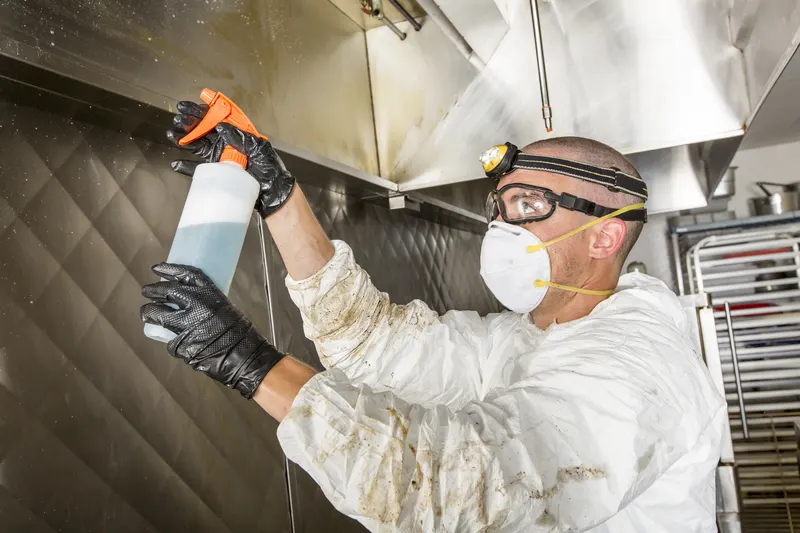
Fryer line vs charbroiler line vs pizza oven in Niagara Falls
Three common restaurant lines, three different grease patterns, three different conversations at the walk-through.
| Line type vs grease pattern | Where the grease lands | What it means for the visit |
|---|---|---|
| Fryer line | A light vapour that coats the filters evenly and travels well up the duct. | The duct gets as much attention as the canopy. Long hours drive the interval. |
| Charbroiler line | Smoke and hot airborne grease, heaviest in the plenum and the first metres of duct. | High-volume class under NFPA 96, so a quarterly visit is the published interval. |
| Pizza oven | Gas: mostly heat. Wood or coal: creosote mixed with grease in the flue. | A gas oven is quoted with the hood. A solid-fuel oven is quoted per job and runs on a monthly interval. |
Where to find restaurant hood cleaning near me in Niagara Falls
Niagara Falls Hood Cleaning covers the restaurant corridors where most Niagara kitchens sit, from the tourist strip to the downtown blocks.
Lundy's Lane carries the long run of family restaurants, pancake houses and franchise grills that feed motel guests from breakfast to late dinner. Clifton Hill packs burger, pizza and fried-food counters into a few blocks of heavy summer foot traffic. Queen Street downtown, now under revitalization, holds newer independents and bars that run late.
In St. Catharines, St. Paul Street is the downtown dining strip and Port Dalhousie is the lakeside patio district where kitchens peak on warm evenings. The same crew and the same price list cover Welland, Thorold, Fort Erie and the rest of the region, listed on the areas served page.
Hotel and casino kitchens with several outlets under one roof run differently and have their own page on hotel, casino and tourism kitchens.
How a restaurant hood cleaning service works around your hours
The crew arrives after close. Overnight and between-service scheduling means the visit starts after your last ticket and finishes before the morning prep cook arrives. A breakfast cafe can book the afternoon gap instead.
Your line is covered, not moved. Appliances are shut down and wrapped, and the runoff is contained. The canopy, filters, plenum, duct and fan are cleaned in one visit. The method for each part is on the hood vent cleaning and kitchen exhaust cleaning pages.
The kitchen is ready for prep. Filters go back in, the fan is restarted and the floor is left dry.
What a restaurant owner gets on paper
A signed certificate. The health and safety certificate references the published NFPA 96 standard and carries the date of the clean. Niagara Falls Hood Cleaning is not affiliated with NFPA. The certificate goes in the binder the fire inspector asks for.
Before-and-after photographs. Every cleaned surface is photographed, so your insurer and your landlord see the same proof you do.
Insurance proof up front. Proof of WSIB coverage and liability insurance arrives before work starts. Niagara Region Public Health inspects food premises across the region and publishes the results online, so a clean, documented exhaust system is part of a good record. The NFPA 96 page explains what the standard asks for.
How much does restaurant hood cleaning cost in Niagara Falls in 2026?
Restaurant hood cleaning in Niagara Falls costs from $585 per visit for a single-hood kitchen up to ten feet and from $995 per visit for a multi-hood kitchen of two to four canopies, with a written quote back within 24 hours.
Fan repair and solid-fuel appliances are quoted per job after inspection or walk-through. What moves a restaurant quote is the canopy length, the duct run and the roof access. The hood cleaning cost guide breaks those factors down, and the services hub matches a symptom to the right service.
Next step: call 289-272-7390 or request a written quote. Say what your line cooks and what time you close.
Restaurant hood cleaning in Niagara Falls: frequently asked questions
Can restaurant hood cleaning be done without closing for a day?
Restaurant hood cleaning in Niagara Falls is booked after close and finished before morning prep, so the kitchen loses no service. A breakfast cafe can use the afternoon gap instead.
How often does a pizzeria with a wood-fired oven need cleaning?
A wood-fired oven is a solid-fuel appliance, and NFPA 96 publishes a monthly interval for solid-fuel cooking. A pizzeria running that oven daily is on the monthly interval, quoted per job after a walk-through.
Does a sports bar with a fryer bank need more visits than a cafe?
A sports bar running fryers from the afternoon to last call loads its system far faster than a cafe that closes at three. The walk-through reads the grease depth and sets the interval from the hours your line actually runs.
What paperwork does a restaurant get after the clean?
A restaurant receives a signed health and safety certificate referencing the published NFPA 96 standard, before-and-after photographs of every cleaned surface, and proof of WSIB coverage and liability insurance before work starts.
Is a restaurant on St. Paul Street priced the same as one on Lundy's Lane?
Yes. A single-hood kitchen up to ten feet is from $585 per visit and a multi-hood kitchen of two to four canopies is from $995 per visit anywhere in the ten Niagara municipalities served.