How often should commercial hoods be cleaned in Niagara Falls?
Commercial Hood Cleaning Frequency is the interval between full cleans of a kitchen exhaust system, and NFPA 96 ties it to what you cook and how much: monthly for solid fuel, quarterly for high volume, twice a year for moderate volume and yearly for low volume. In Niagara Falls and the wider Niagara Region, many kitchens cook on a tourist calendar, so a fixed calendar date can miss the months that load the duct fastest. The better schedule follows your own busy season, and the clean that matters most is the one in spring, before the summer rush starts.
Why a fixed date fails a tourist-season kitchen
A fixed cleaning date assumes grease builds at a steady rate, and in a Niagara tourist kitchen it does not.
Think of a grill near Clifton Hill. From January to March it serves a few tables a night. In July it runs every burner from late morning to past midnight, seven days a week. One summer week can put more grease into the duct than the whole winter. A cleaning booked every six months from a January start lands in July, in the middle of the heaviest loading, and the next one waits until the following winter.
The result is a duct that crosses the 0.078 inch limit in August with nobody looking. The schedule looked compliant on paper while the grease sat above the line all season.
The Niagara kitchen calendar, season by season
The Niagara year has four loading periods, and each one asks something different of a cleaning schedule.
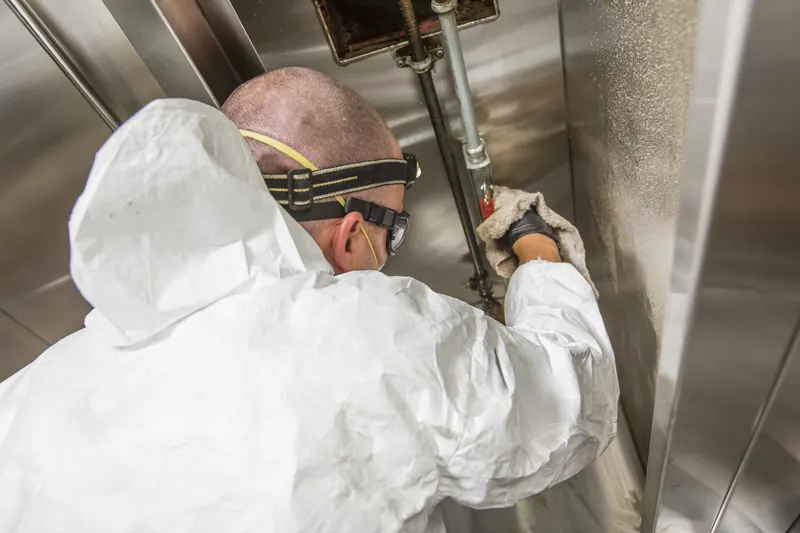
Spring, before the rush. Book the pre-season clean in April or May. The system starts the summer at bare metal, the fan is checked before it runs flat out, and your certificate is fresh when the fire service or head office asks.
Summer peak. Kitchens in the Fallsview district, on the Niagara Parkway and in Niagara-on-the-Lake during the Shaw Festival season run their longest hours. A high-volume line may need a second clean mid-summer, scheduled overnight so no service is lost.
Harvest and event season. Winery restaurants and tasting-room kitchens in Lincoln and Niagara-on-the-Lake peak in September and October, with weddings and event weekends stacked on top. A clean just before harvest suits them better than one in spring.
Winter lull. Many tourist kitchens slow down or close. It is a good time for fan repair and access work, and a quiet check before the spring clean. Year-round kitchens in St. Catharines or Welland that serve students and locals load more evenly and suit a steadier schedule.
Calendar schedule vs season-based schedule in Niagara Falls
A season-based schedule places the same number of cleans where the grease builds, while a calendar schedule spaces them evenly whether the kitchen is busy or not.
| Question | Calendar schedule | vs season-based schedule |
|---|---|---|
| How dates are set | Even gaps from whenever the first clean happened | Anchored to the start of your busiest months |
| State at the start of peak | Could be months since the last clean | Freshly cleaned to bare metal |
| Risk of crossing 0.078 in | Highest mid-season, when nobody checks | Managed with a mid-peak clean if needed |
| Disruption to service | May land on a sold-out weekend | Booked in quieter weeks or overnight |
| Best suited to | Year-round kitchens with steady volume | Tourist, winery and seasonal kitchens |
Either way, the gap between cleans must not exceed the interval NFPA 96 sets for your cooking volume. That table lives on the NFPA 96 page.
Signs your hood is overdue for cleaning
A hood is overdue when grease shows where you can see it, because the hidden parts of the system are always further along.
- Grease drips from the filter edges or the canopy lip onto the line.
- Filters come out sticky or dark a day after they were washed.
- Smoke hangs in the kitchen or rolls out from under the hood.
- The rooftop fan is louder than usual, or grease pools on the roof around it.
- The last cleaning sticker or certificate is older than your NFPA 96 interval.
If you see any of these, book a clean now rather than waiting for the next calendar date. The kitchen exhaust cleaning page explains how the whole path is cleaned.
How to set an interval from your own cook line
Your own interval starts from the NFPA 96 category for your cooking, then shortens for the months your line works hardest.
First, find your category. A wok line or charbroiler is high volume. A wood oven is solid fuel. A church or seasonal kitchen is low volume. Second, mark your busy months on a calendar. Third, place one clean just before the busy months start and check whether the peak needs a second one. Fourth, ask for the grease depth to be recorded at each clean. Two or three visits of data show whether your interval is right, too long or too short. The kitchen segments that follow each pattern are on the who we serve page.
Where to find hood cleaning near me in Niagara Falls before the summer rush
Niagara Falls Hood Cleaning books pre-season and mid-season cleans across Niagara Falls, St. Catharines, Welland, Thorold, Fort Erie, Niagara-on-the-Lake, Port Colborne, Lincoln, Pelham and Wainfleet.
Spring dates fill first, so book early. Cleans run overnight or between services. What a visit costs is in the cost guide, and every service is on the commercial cleaning services page.
Next step: call 289-272-7390 or request a written quote. Tell us which months are your busiest.
Hood cleaning frequency: frequently asked questions
How often does a restaurant hood need cleaning in Ontario?
A restaurant hood in Ontario needs cleaning on the interval NFPA 96 sets for its cooking volume, which the Ontario Fire Code references. That ranges from monthly for solid fuel to yearly for low-volume kitchens.
Is twice a year enough for a busy summer kitchen?
Twice a year is the NFPA 96 interval for moderate volume, and a high-volume summer line falls on quarterly. Timing matters too: one of those cleans should land just before the season starts.
Should a seasonal kitchen clean when it closes or when it opens?
A seasonal kitchen gets the most from a clean just before it opens, so the system starts the busy months clean. A quick check at closing helps catch fan or access problems early.
Can my staff clean the hood between professional visits?
Staff can wash filters and wipe the canopy face between visits, and that slows the build-up. The plenum, duct and fan still need a professional clean on schedule.
Does a winery restaurant follow a different schedule?
A winery restaurant often peaks at harvest and on event weekends rather than in midsummer. A clean in late summer, before harvest, usually suits it better than a spring-only schedule.