Commercial kitchen hood types: Type 1 vs Type 2 hood explained
A Type 2 Commercial Hood is a canopy that pulls heat, steam and cooking odour out of a kitchen from appliances that do not produce grease, such as dishwashers, steamers and many bake ovens. A Type 1 hood is the grease hood: it sits over fryers, griddles, charbroilers, ranges and woks, carries baffle filters and a fire suppression system, and connects to a sealed grease duct. Only the Type 1 hood falls under NFPA 96 grease cleaning. Knowing which one hangs over each appliance tells a Niagara operator what the fire service expects and what a cleaning visit has to cover.
Why the hood type matters to your kitchen
The appliance under a canopy decides its type, and the type decides whether grease cleaning to NFPA 96 applies at all.
Most operators never think about the label on their hood until something changes. You add a fryer to a cafe that only baked. You buy a building with two canopies and no paperwork. A fire prevention officer asks which hood serves the flat-top. In each case the answer turns on one question: does the appliance under the hood put grease into the air.
If it does, the hood is Type 1 and the whole exhaust path behind it (filters, plenum, duct, fan) collects grease that has to be measured and cleaned. If it does not, the hood is Type 2 and it handles heat and moisture, which calls for routine wiping and maintenance, not grease cleaning.
Type 1 vs Type 2 hood in Niagara Falls kitchens: side by side
A Type 1 hood is built to contain grease and fire, while a Type 2 hood is built to move heat and moisture, and every difference below follows from that.
| Feature | Type 1 (grease hood) | vs Type 2 (heat and condensate hood) |
|---|---|---|
| What it removes | Grease-laden vapour, smoke and heat | Heat, steam and odour |
| Typical appliances | Fryers, griddles, charbroilers, ranges, woks, pizza ovens that cook greasy food | Dishwashers, steamers, pasta cookers, many bake and convection ovens |
| Filters | Listed grease filters, usually stainless baffles | Often none, or a simple condensate gutter |
| Ductwork | Sealed, welded grease duct with access panels | Ordinary sheet-metal exhaust duct |
| Fire suppression | Required over the cooking line | Not part of the hood |
| NFPA 96 grease cleaning | Yes, the whole path to the roof fan | No, routine wiping and maintenance |
What is a Type 1 hood?
A Type 1 hood is a grease-rated canopy installed over any appliance that releases grease or smoke into the air while it cooks.
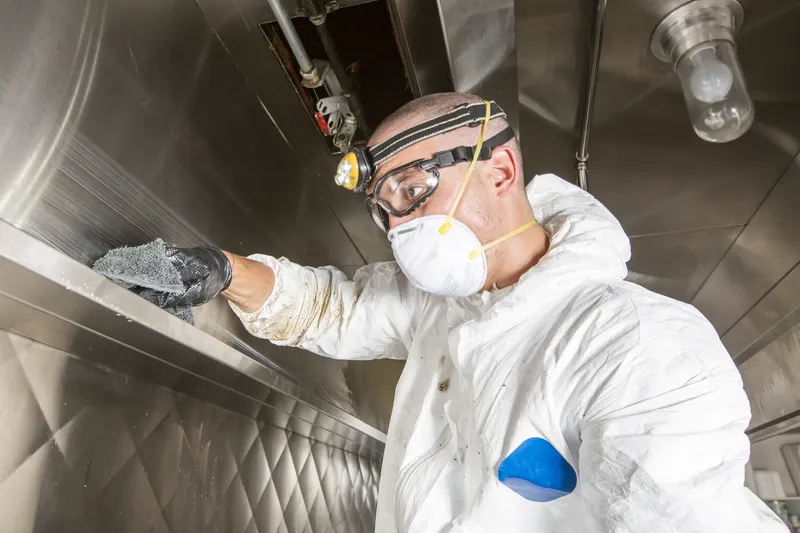
You can usually spot a Type 1 hood from the floor. It has a row of angled metal baffle filters along the front, a grease trough or cup at the low edge, and nozzles from a wet chemical suppression system pointed at the appliances. Behind the filters is the plenum, and above it a duct that runs to an upblast fan on the roof.
That path is what NFPA 96 governs. The standard, which the Ontario Fire Code references, sets how often it is inspected and when it must be cleaned. The details of the rules sit on the NFPA 96 page.
What is a Type 2 commercial hood?
A Type 2 commercial hood is a heat and condensate canopy that captures steam and warm air from appliances that cook or wash without releasing grease.
The classic example is the canopy over a dish machine. Steam rises every cycle, and without a hood it soaks the ceiling tiles and drips onto clean racks. Bakeries, banquet dish rooms and hotel steam lines use the same kind of hood. A Type 2 hood usually has no grease filters and no suppression nozzles, and its duct is ordinary sheet metal.
A Type 2 hood still needs care. Condensate gutters clog, lint and dust build on the underside, and moisture can rust seams. That work is maintenance, not the grease cleaning that NFPA 96 describes.
Converting a Niagara kitchen: when a Type 2 hood is no longer enough
A Type 2 hood becomes the wrong hood the day a grease-producing appliance goes under it.
This comes up often around the Niagara Region. A Queen Street storefront in Niagara Falls turns from a bakery into a brunch spot with a flat-top. A tasting room in Vineland or Jordan adds a fryer for event weekends. A church hall in Welland starts running fish fries. A banquet room in St. Catharines moves a charbroiler into what used to be a warming kitchen.
Each change puts grease into a hood and duct that were never built to contain it. Before you move equipment, check with the fire service in your municipality (in Niagara Falls, the Niagara Falls Fire Department) and with your hood installer. The fix is usually a Type 1 hood, a grease duct and a suppression system over the new appliance. Once it is in, the new system joins the cleaning schedule.
Where to find commercial kitchen hood cleaning near me in Niagara Falls
Niagara Falls Hood Cleaning cleans Type 1 grease hood systems in Niagara Falls, St. Catharines, Welland, Fort Erie, Niagara-on-the-Lake and the rest of the Niagara Region.
Price and timing depend on your system, and they are covered in the cost guide and the frequency guide. The full list of services is on the commercial cleaning services page, and more guides are in the guides hub.
Next step: call 289-272-7390 or book a free walk-through to have each hood in your kitchen identified.
Type 1 and Type 2 hoods: frequently asked questions
How can I tell if my hood is Type 1 or Type 2?
A Type 1 hood has baffle grease filters, a grease cup and suppression nozzles over the cooking line. A hood with none of those, sitting over a dish machine or steamer, is almost always a Type 2 hood.
Does a Type 2 hood need professional cleaning?
A Type 2 hood needs routine wiping and gutter maintenance, not grease cleaning to NFPA 96. Your own staff can often handle it on the regular cleaning rota.
Can I put a fryer under a Type 2 hood?
A fryer produces grease-laden vapour, so it belongs under a Type 1 hood with a grease duct and fire suppression. Check with your municipal fire service and a hood installer before you move the appliance.
Is a pizza oven a Type 1 or Type 2 appliance?
A pizza oven that cooks greasy food or burns wood usually sits under a Type 1 hood. Solid-fuel ovens also carry the shortest inspection interval in NFPA 96, so they need extra attention.
Does my kitchen need both types of hood?
Many full-service kitchens have both: a Type 1 hood over the cook line and a Type 2 hood over the dish room. Each one gets the care its own appliances call for.